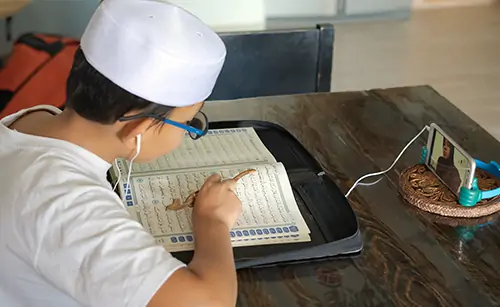
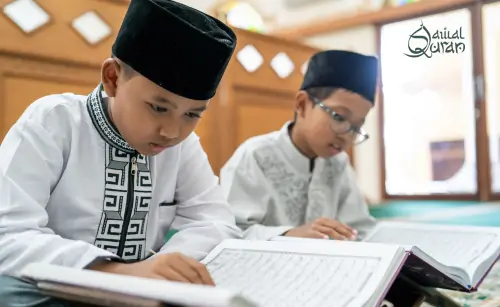
Many Muslim parents enroll their children in online Quran classes with sincere intentions and high hopes. Weeks turn into months, yet a worrying question keeps coming to mind:
“Why is my child still struggling with Quran reading?”
If you feel disappointed, confused, or even guilty — you are not alone. This is one of the most common concerns parents in the UK, USA, Canada, and Australia face today.
The good news?
- The problem is usually not your child.
- And it can be fixed with the right approach.
This guide explains why improvement stops, what parents often miss, and how to place your child back on the correct Quran learning path — for success in this life and reward in the Hereafter.
The Hidden Reasons Your Child Is Not Improving
1. No Proper Tajweed Foundation
Many online classes focus only on finishing lessons, not correct recitation.
Common issues:
- Makharij (pronunciation points) are ignored
- Mistakes are repeated daily
- Teacher does not stop the child to correct errors
- Without Tajweed, progress is only an illusion.
2. Group Classes with No Personal Attention
In large or rushed classes:
- Teachers cannot listen carefully
- Quiet children remain unnoticed
- Weak students fall behind silently
- Quran learning requires individual correction, especially for kids.
3. No Structured Learning Plan
Parents often hear:
“Your child is doing fine.”
But there is:
- No clear syllabus
- No level system
- No progress report

Without structure, there is no measurable improvement.
4. Teacher Is Not Trained to Teach Children
Knowing Quran and teaching Quran are two different skills.
If the teacher:
- Lacks child-teaching experience
- Cannot communicate well in English
- Uses the same method for every student
Your child may lose confidence and interest.
5. Lack of Parent Involvement
Many parents assume:
“Online class means responsibility is over.”
In reality, children need:
- Motivation
- Encouragement
- Occasional monitoring
Why This Problem Hurts Parents So Deeply
This issue is emotionally painful because parents are not just paying fees — they are investing in their child’s Akhirah.
Parents worry:
- Is my child reading Allah’s words correctly?
- Am I failing in my responsibility?
- Will these mistakes continue into adulthood?
- Islam teaches us that guiding our children toward correct Quran learning is a lifelong reward (Sadaqah Jariyah).
How to Fix the Problem:
1. Start with Proper Tajweed — Not Later
Correct Tajweed should be:
- Taught from day one
- Practiced daily
- Corrected gently but firmly

A strong Tajweed foundation builds:
- Confidence
- Fluency
- Love for the Quran
- This is why enrolling in a structured Tajweed course is essential.
2. Choose One-to-One Online Quran Classes
Personal classes allow:
- Full teacher attention
- Immediate correction
- Faster improvement
Children feel:
- Seen
- Encouraged
- Comfortable asking questions
3. Follow a Structured Syllabus
A proper Quran program includes:
- Step-by-step Tajweed rules
- Gradual Quran reading levels
- Regular assessments
Progress should be visible and measurable.
4. Combine Quran Reading with Understanding
Children improve faster when they understand what they recite.
That’s why:
- Basic Tafsir
- Simple explanations
- Practical Islamic lessons
are important alongside recitation.
5. Teach Namaz Alongside Quran
Quran learning becomes meaningful when applied in daily life.
A child who:
- Reads Quran correctly
- Understands basic meanings
- Knows how to pray properly
Develops a strong Islamic identity.
How Awwal Quran Solves These Problems
Awwal Quran was created to address exactly these challenges faced by Muslim families abroad.
What Makes Awwal Quran Different?
- Qualified Tajweed teachers
- One-to-one online classes
- Child-friendly teaching methods
- Structured Quran & Tajweed syllabus
- Supportive communication with parents
- Courses designed for UK, USA, Canada & Australia
Families enroll not just for lessons — but for long-term correct learning.
Courses That Help Children Improve Properly
Parents looking to fix slow progress usually benefit from combining these programs:
- Online Tajweed Course – for correct Quran pronunciation
- Quran Learning Course – for fluent reading & confidence
- Namaz Course – to build daily Islamic practice
- Basic Tafsir Course – to help children understand Allah’s words
These courses work together, not separately.
Worldly Benefits & Hereafter Rewards (Why This Matters)
When a child learns Quran correctly:
In This World
- Strong Islamic values
- Confidence in prayer & recitation
- Positive discipline and focus
In the Hereafter
- Continuous reward for parents
- A child who recites Quran becomes a source of honor
- Fulfillment of an important parental responsibility
The Prophet ﷺ emphasized the virtue of teaching Quran — this investment never expires.
Call-to-Action
If your child is not improving in online Quran classes, do not lose hope.
Sometimes, the solution is not more time —
- it’s the right guidance, correct Tajweed, and proper structure.
Parents searching for:
- A reliable Tajweed course
- A complete Quran learning program
- Practical Namaz training
- Child-friendly Tafsir lessons
will find that Awwal Quran focuses on quality, correction, and long-term success.
- Explore the course pages, review real parent feedback, and choose a path that benefits your child in this life and the Hereafter.
FAQs
Why is my child slow in online Quran classes?
Usually due to lack of Tajweed correction, large classes, or no structured syllabus.
Are one-to-one Quran classes better for kids?
Yes, they allow personal attention and faster improvement.
Should Tajweed be taught from the beginning?
Absolutely. Early Tajweed prevents lifelong mistakes.
How can parents help improve Quran learning at home?
By staying involved, motivating children, and choosing the right academy.
Does understanding Quran (Tafsir) help children?
Yes, it increases interest, focus, and love for the Quran.
Is combining Namaz and Quran learning beneficial?
Yes, it helps children apply Quran teachings in daily life.